 01 / 04
Industrial reuse
A tailored route for variable industrial effluent
Screen electrocoagulation and electro-oxidation against the site's changing feed and reuse target.
Explore the approachIllustrative pathways show how customized treatment and advisory decisions can be structured. They are not awarded or completed client projects.
01 / 04Screen electrocoagulation and electro-oxidation against the site's changing feed and reuse target.
Explore the approach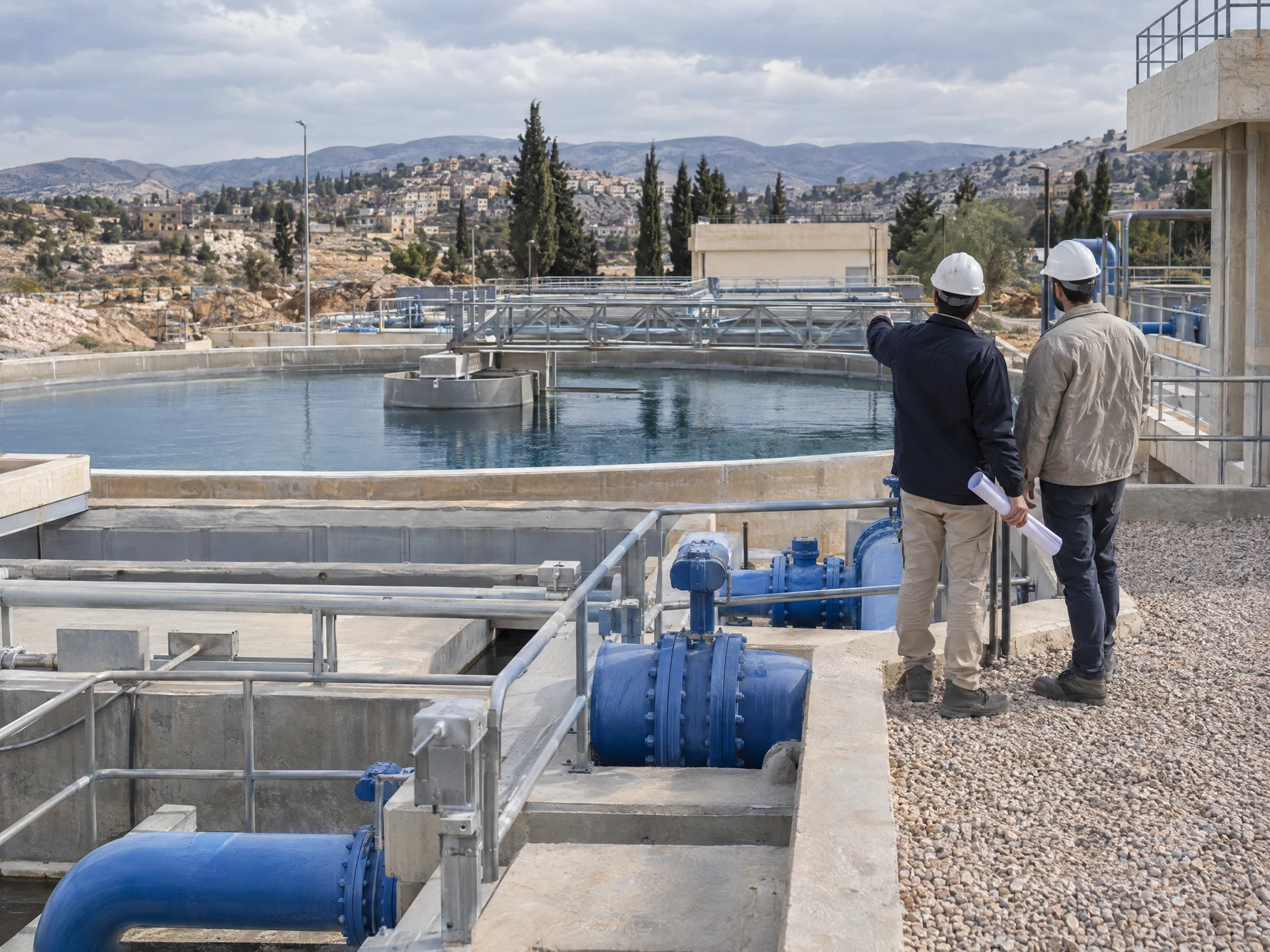 02 / 04
Independent diagnostics and customized owner-side engineering for a municipal treatment asset.
Explore the approach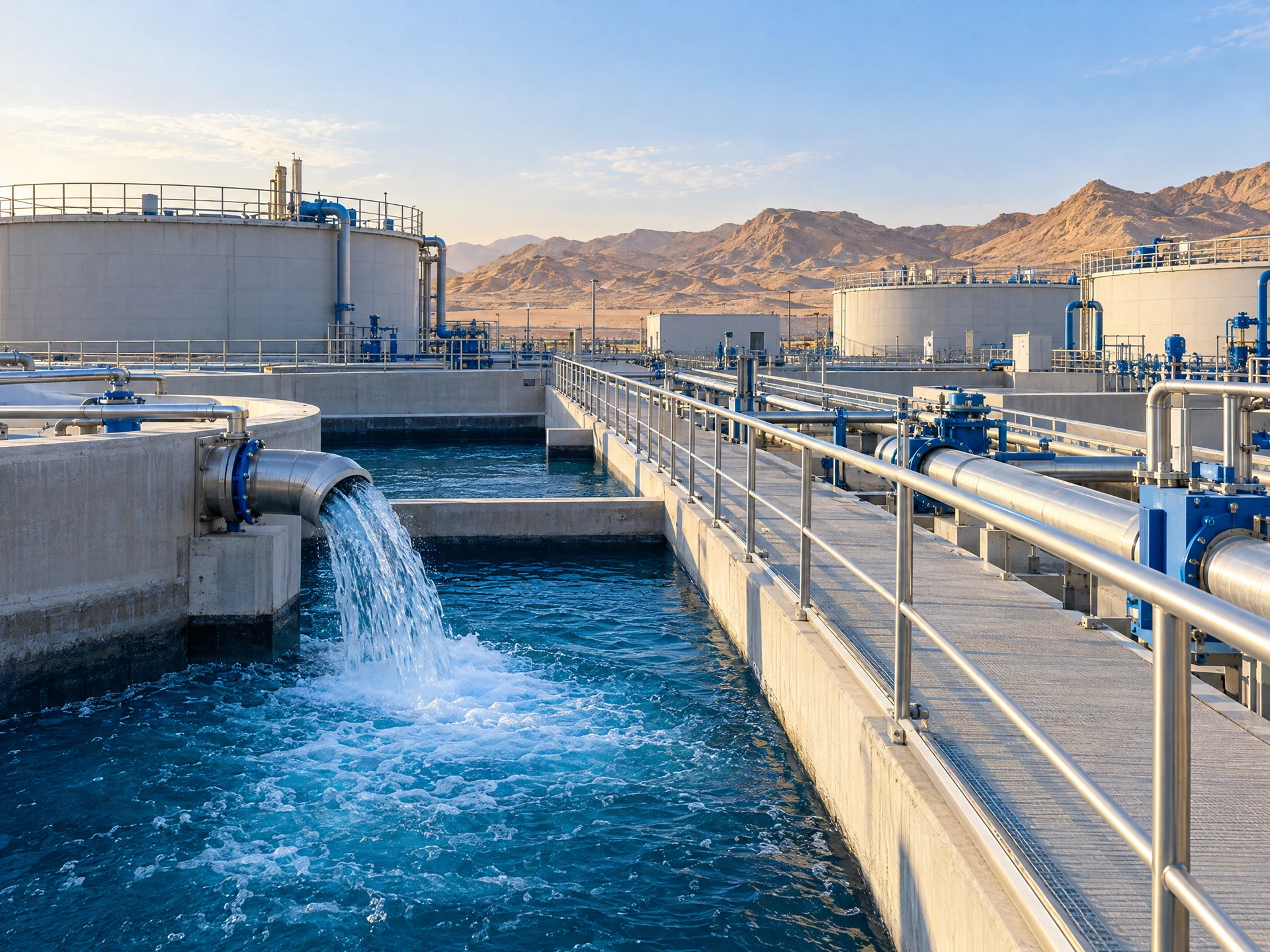 03 / 04
A ZLD feasibility pathway that starts with the full water and salt balance.
Explore the approach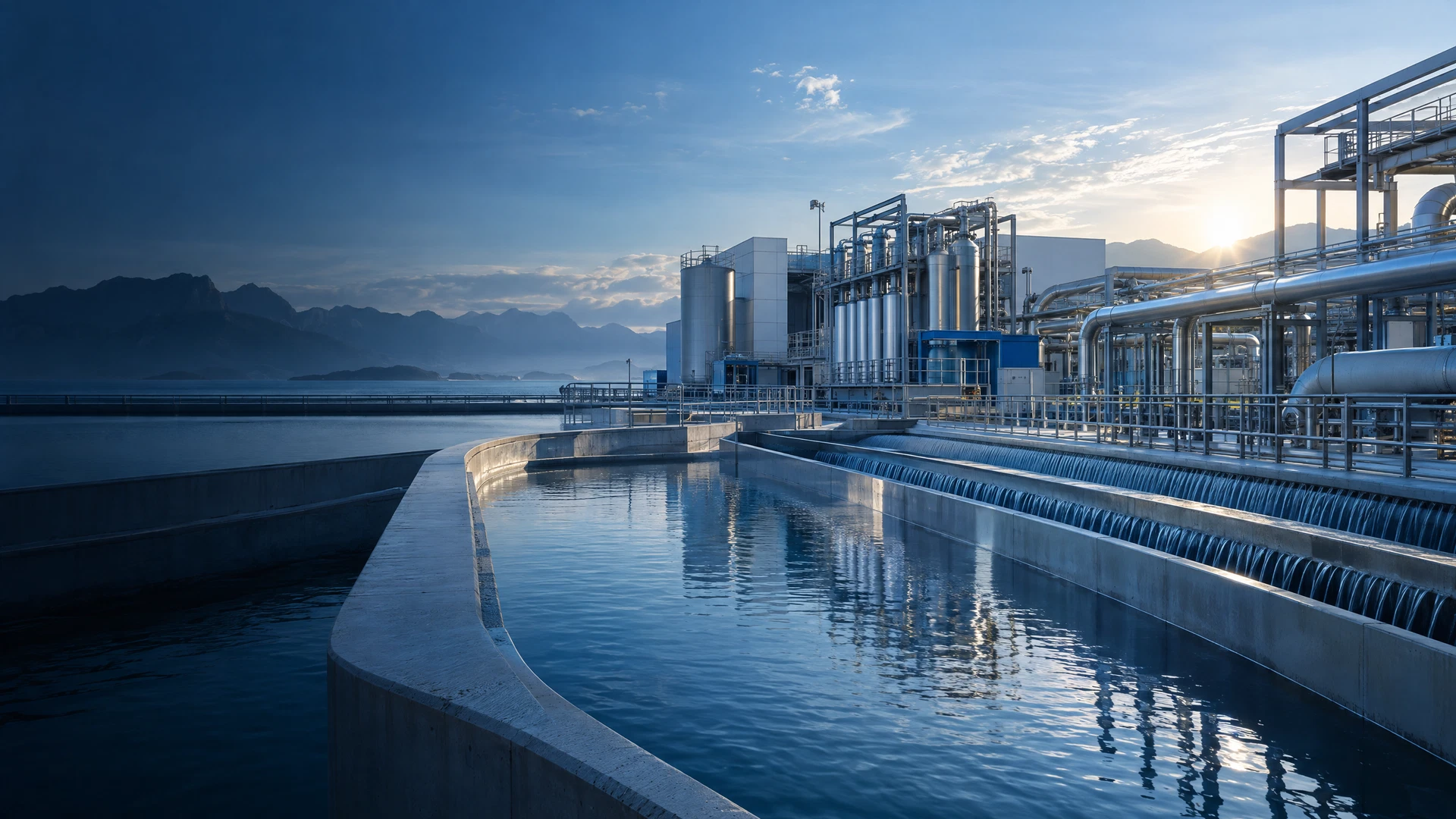 04 / 04
An electrocapacitive pilot concept for brackish process water with a defined ionic target.
Explore the approachAn industrial operator needs a dependable non-potable reuse stream, but production cycles make feed quality variable and the final specification demanding.
Characterize representative feed, then compare a modular electrocoagulation and electro-oxidation train with a relevant baseline. Select each step only where testing adds value.
Agree sampling, energy metering, residual handling and acceptance criteria before a pilot. Track quality, recovery, power, electrode use, uptime and maintenance through feed changes.
The intended output is a decision-ready reuse design and scale-up case; no completed customer result is claimed.
A treatment facility needs dependable compliance and maintainable operation under constraints on power, spares, staffing and capital.
Begin with an independent site audit and representative data. Define a fit-for-feed treatment scope and assess whether an electrochemical step would genuinely help.
Prepare phased procurement and acceptance criteria, operator training, critical spares and a service plan. Disclose affiliations when evaluating tenders.
The intended result is an investment-ready rehabilitation sequence and measurable acceptance test, not a claimed completed project.
A desalination or industrial asset needs a defensible route for concentrate and solids, not simply a larger recovery claim.
Compare concentration, evaporation and crystallization options against the actual feed, available utilities and legally viable residual routes.
Test representative feed; model water, salt and energy balances; verify permits and solids handling before a capital decision.
The intended deliverable is a justified ZLD design envelope and go/no-go investment gate. Feasibility remains site-specific.
A site needs to adjust particular dissolved constituents without assuming every ion requires the same separation process.
Profile the feed and target ions, then screen electrocapacitive treatment against a suitable alternative and a credible baseline.
Measure product quality, regeneration stream, recovery, energy, fouling and operating stability under representative conditions.
The intended result is a transparent selection decision and integration scope; no savings or removal percentage is asserted without tests.
Illustrative application scenarios only. Actual project scope, results and performance depend on site-specific testing and contracted work.