Made for the water.
Not the catalogue.
Four advanced pathways—electro-oxidation, electrocoagulation, electrocapacitive treatment and ZLD—combined as the application demands.
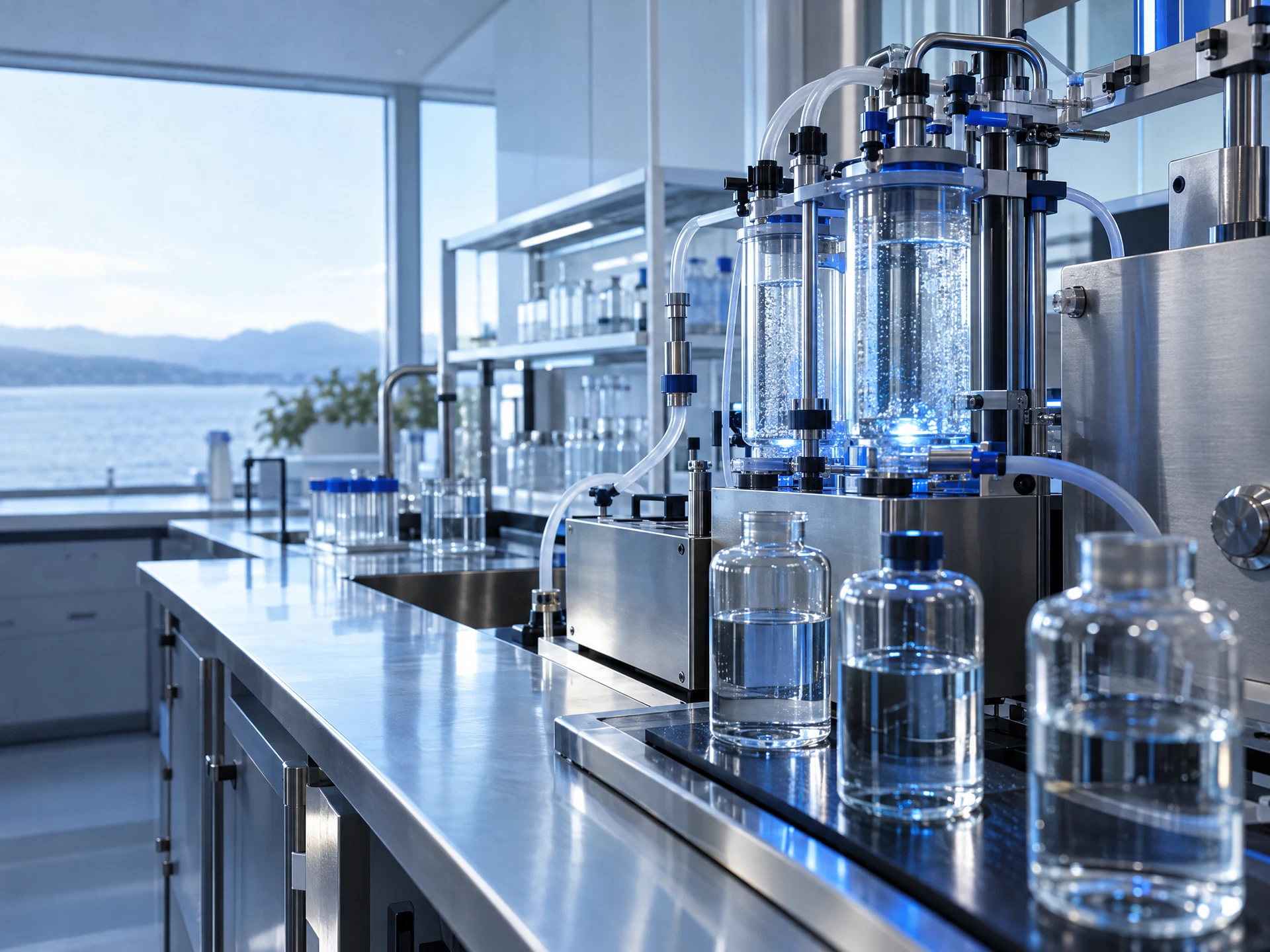
Explore the technology.
Each pathway plays a different role in a custom treatment train.
Electro-oxidation
A targeted response to hard-to-treat contaminants.
Electrocoagulation
Coagulation generated precisely where it is needed.
Electrocapacitive treatment
Selective ion control, designed to the water.
Zero liquid discharge
A responsible pathway for the last drop.
Compare the pathways.
Select two or three technologies to compare roles, applications and evidence needs. The final solution is engineered from your water data—not from this table alone.
Showing 2 capabilities. Select up to 3.
| Compare by | Electro-oxidation ↗ | Electrocoagulation ↗ |
|---|---|---|
| Primary role | Oxidative treatment of selected contaminants | Destabilization, aggregation and removal |
| Typical applications | Difficult industrial effluent and final polishing | Industrial wastewater, metals and complex solids |
| How it integrates | Feed screening → electrode selection → instrumented pilot | Electrodes + separation + solids management |
| What to evaluate | Contaminant response, energy, by-products and electrode life | Removal, power, electrode use and sludge route |
| Ongoing support | Pilot engineering, controls and scale-up support | Bench testing, pilot design and operating support |
No single technology is guaranteed to treat every feed; testing establishes the suitable combination, performance and residual route.
Characterize
Define feed variability and the target outcome.
Configure
Screen the best-fit electrochemical and ZLD steps.
Prove
Pilot against a meaningful baseline.
Deliver
Engineer for safe, maintainable operation.